
Artificial Intelligence helps detect deepfake videos
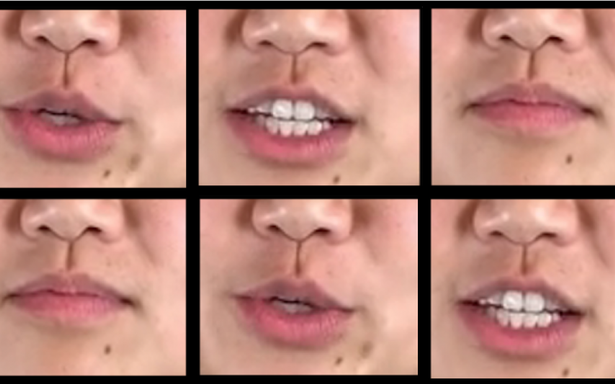
Artificial Intelligence helps detect deepfake videos
Researchers tested the tool with an AI-based neural network on videos of former U.S. President Barack Obama. The neural network spotted over 90% of lip syncs involving Obama himself.
(Subscribe to our Today’s Cache newsletter for a quick snapshot of top 5 tech stories. Click here to subscribe for free.)
Researchers at Stanford University and UC Berkeley have devised a programme that uses artificial intelligence (AI) to detect deepfake videos.
The programme is said to spot 80% fakes by recognising minute mismatches in the sounds people make and the shape of their mouths, according to the study titled ’Detecting Deep-Fake Videos from Phenome-Viseme Mismatches’.
Deepfake videos can be made using face-swapping or lip sync technologies. Face swap videos can be convincing yet crude, leaving digital or visual artifacts that a computer can detect.
Lip syncing is subtle, and harder to spot. The technology manipulates a smaller part of the image, and then synthesises lip movements that closely match the way a person’s mouth would move if they had said particular words. With enough samples of a person’s image and voice, a deepfake video-maker can manipulate an image to “say” anything, the team said.
The team built a tool to look for ‘visemes’ or mouth formations, and ‘phenomes’ or phonetic sounds.
Watch | Have you been swapping?
It tested the tool with an AI-based neural network on videos of former U.S. President Barack Obama. The neural network spotted over 90% of lip syncs involving Obama himself.
Although the program may help detect visual anomalies, deepfake detection is a cat-and-mouse game. As deepfake techniques improve, fewer clues will be left behind, the team said.
Deepfake could also lead to a spike in misinformation which will be much harder to spot.
Published at Sun, 18 Oct 2020 07:30:04 +0000
AI shows promise for breast cancer screening, says QF researcher
AI shows promise for breast cancer screening, says QF researcher
18 Oct 2020 – 9:05

Dr. Halima Bensmail, Principal Scientist and Associate Professor at Qatar Computing Research Institute, HBKU.
Doha: Artificial Intelligence (AI) models are being developed and used to predict breast cancer in mammography scans with more accuracy than radiologists, thereby reducing false positives and false negatives.
AI will become more common in breast cancer screening within the next ten years, said a Qatar Foundation (QF) researcher.
“When using the naked eye to define abnormalities in image data or while analysing tissue, one could go wrong in the analysis. However, with artificial intelligence, classification of abnormal or normal tissue is more accurate,” said Dr. Halima Bensmail, the Principal Scientist and Associate Professor at Qatar Computing Research Institute, part of QF’s Hamad Bin Khalifa University.
“Due to the extensive variation from patient to patient data, traditional learning methods are not reliable, and machine learning has evolved over the last few years with its ability to sift through complex and big data to be able to detect abnormalities,” she told The Peninsula.
Similar to other countries in the region, Qatar has one of the highest breast cancer incidence and mortality rates. Regular screening and early detection are crucial for breast cancer. There are different breast diagnostic approaches, such as mammography, magnetic resonance imaging (MRI), and ultrasound among others. And the use of Artificial Intelligence (AI) in these diagnostic technologies is becoming increasingly popular. Currently, digital mammography is used as the standard method for early breast cancer detection, but it appears to have its limitations, and AI is coming to its rescue.
According to Dr. Bensmail, in the area of digital imaging, Qatar’s mammography image quality is deemed adequate, as per a study titled ‘Breast Cancer Detection in Qatar: Evaluation of Mammography Image Quality Using A Standardized Assessment Tool’, funded by QF’s Qatar National Research Fund. But the study also notes that as the country develops additional capacity and awareness for mammography screening, it will be important to continuously monitor image quality.
“People will always ask, what is the accuracy of your prediction, or what is more important when designing a machine learning model: model performance or model accuracy. This answer depends on the application and the field. But so far, we don’t have any machine learning algorithm or artificial intelligence model that gives us 100 percent accuracy of the prediction,” said Dr. Bensmail.
A lot of AI is built on machine learning. In machine learning, scientists train the system to learn something very specific, such as bad breast tissue versus good breast tissue through images. By training the system with massive amounts of data, it learns to differentiate between bad tissue and good tissue. Over time, the algorithm learns to predict with great accuracy.
Dr. Bensmail said AI algorithms such as deep learning and neural network-based algorithm offer extremely good results in breast cancer detection — they provide 90 to 97 percent accuracy of image data, such as in mammograms. However, when enough data isn’t available, machine learning or AI models cannot be effectively built and this is a challenge in the region.
With AI advancing rapidly, Dr. Bensmail predicts that within the next 10 years, AI will become even more common in clinical practice. She said that predicting a disease, particularly classifying breast cancer in the radiology department, is something that is happening rapidly, specifically in the area of image data analysis.
Read also
Published at Sun, 18 Oct 2020 06:00:00 +0000


